
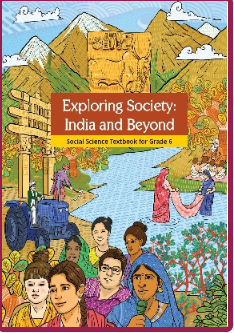
Class 6 Social Science (Exploring Society: India and Beyond) NCERT Solutions
Welcome to the most complete and student-friendly resource for Class 6 Social Science Exploring Society: India and Beyond NCERT Solutions. This page provides theme-wise and chapter-wise solutions, question answers, chapter summaries, map work, and extra practice questions for all 14 chapters of the NCERT Social Science textbook. Whether you are preparing for your CBSE Class 6 annual exams, school unit tests, or simply want to understand Social Science better, our solutions are written in simple and easy language to help every student score well.
About Class 6 Social Science Exploring Society: India and Beyond Textbook
The NCERT Social Science Exploring Society: India and Beyond textbook for Class 6 is a new and modern integrated Social Science book prepared under the National Education Policy. This book brings together History, Geography, and Civics in a single integrated format organised into five broad themes. It explains the society, culture, geography, history, and governance of India and the world in an interesting and activity-based manner. The book begins with an Introduction titled Why Social Science that explains the importance and purpose of studying Social Science. The book is designed to develop social awareness, critical thinking, and global understanding among Class 6 students.
Class 6 Social Science Exploring Society – All Themes and Chapters with Solutions
Introduction – Why Social Science?
Theme A – India and the World: Land and the People
Chapter 1 – Locating Places on the Earth
Chapter 2 – Oceans and Continents
Chapter 3 – Landforms and Life
Theme B – Tapestry of the Past
Chapter 4 – Timeline and Sources of History
Chapter 5 – India, That Is Bharat
Chapter 6 – The Beginnings of Indian Civilisation
Theme C – Our Cultural Heritage and Knowledge Traditions
Chapter 7 – India’s Cultural Roots
Chapter 8 – Unity in Diversity, or ‘Many in the One’
Theme D – Governance and Democracy
Chapter 9 – Family and Community
Chapter 10 – Grassroots Democracy — Part 1: Governance
Chapter 11 – Grassroots Democracy — Part 2: Local Government in Rural Areas
Chapter 12 – Grassroots Democracy — Part 3: Local Government in Urban Areas
Theme E – Economic Life Around Us
Chapter 13 – The Value of Work
Chapter 14 – Economic Activities Around Us
Why Choose Our NCERT Solutions for Class 6 Social Science Exploring Society?
Our Class 6 Social Science NCERT Solutions are prepared by experienced teachers and subject experts. All solutions are based on the latest NCERT textbook and follow the official CBSE Class 6 exam pattern. Every answer is written in simple and clear language so that students can write accurate and complete answers in their exams. The solutions cover all textbook questions, map work, activity questions, and extra practice questions for each chapter and theme. Students can use these solutions for exam preparation, homework help, or building a deep understanding of History, Geography, and Civics.
Key Features of Our Class 6 Social Science Solutions
All 5 themes and 14 chapters covered with complete question answers. Simple and clear language easy for Class 6 students to understand. Chapter summaries and key points included for every chapter. Map work and geography-based question answers provided. Solutions for History, Geography, and Civics all available at one place. Theme-wise organisation for easy navigation and revision. Extra questions and answers for exam practice included. Free to access with no registration required. Updated as per the latest CBSE syllabus.
Frequently Asked Questions (FAQs) – Class 6 Social Science NCERT Solutions
Q1. What is Class 6 Social Science Exploring Society: India and Beyond? Class 6 Social Science Exploring Society: India and Beyond is a new integrated Social Science textbook prepared by NCERT under the National Education Policy. This book is organised into five themes covering Geography, History, Culture, Governance, and Economics. It gives students a comprehensive understanding of the society, culture, environment, and governance of India and the world. It starts with an introduction on Why Social Science that explains the purpose of the subject.
Q2. How many themes and chapters are in Class 6 Social Science Exploring Society? Class 6 Social Science Exploring Society: India and Beyond has 5 themes and 14 chapters in total along with an introductory section titled Why Social Science. Theme A covers Land and the People with 3 chapters. Theme B covers Tapestry of the Past with 3 chapters. Theme C covers Cultural Heritage with 2 chapters. Theme D covers Governance and Democracy with 4 chapters. Theme E covers Economic Life with 2 chapters.
Q3. Are these NCERT solutions for Class 6 Social Science free? Yes, all NCERT solutions for Class 6 Social Science Exploring Society available on this page are completely free. You do not need to register, log in, or pay anything to access theme-wise and chapter-wise question answers, summaries, and map work solutions.
Q4. What type of questions are asked from Class 6 Social Science in exams? In CBSE Class 6 Social Science exams, questions are typically asked in the form of short answer questions, long answer questions, fill in the blanks, true or false, match the following, map work, and activity-based questions. Chapters from all five themes are important for exams. Chapters on Indus Valley Civilisation, Grassroots Democracy, Locating Places on the Earth, and Economic Activities are frequently asked in school exams.
Q5. What is the Introduction chapter Why Social Science about? The introductory section Why Social Science explains the meaning and importance of studying Social Science. It tells students why it is important to understand society, history, geography, and civics and how these subjects are connected to our everyday lives. This section helps students understand the purpose behind studying the subject and creates interest in the themes that follow.
Q6. What is important in Theme A India and the World: Land and the People? Theme A covers three important geography chapters. Chapter 1 teaches students how to locate places on the Earth using latitude, longitude, and the globe. Chapter 2 covers the seven continents and five oceans with their locations and features. Chapter 3 explains major landforms like mountains, plains, plateaus, and deserts and how they affect human life. Map work from this theme is very important for exams.
Q7. What should students know about the Beginnings of Indian Civilisation in Chapter 6? Chapter 6 covers the Indus Valley Civilisation including its major cities Harappa and Mohenjo-daro, their advanced town planning, drainage system, trade, agriculture, and art. It also covers the Vedic period and its contributions to Indian culture and society. This chapter is very important for short and long answer questions and students should read it carefully and remember all key facts.
Q8. What is the difference between the three parts of Grassroots Democracy in Chapters 10, 11, and 12? Chapter 10 introduces the concept of democracy and grassroots governance. Chapter 11 focuses specifically on local government in rural areas and covers the Panchayati Raj system including Gram Panchayat, Panchayat Samiti, and Zila Parishad. Chapter 12 covers local government in urban areas including municipalities and municipal corporations and their functions. Together these three chapters give students a complete understanding of how democracy works at the grassroots level in both rural and urban India.
Q9. What is Chapter 13 The Value of Work about? Chapter 13 The Value of Work explains the meaning and importance of work in society. It covers different types of work including paid and unpaid work, the dignity of labour, and the contribution of workers to the economy and society. This chapter encourages students to respect all kinds of work and understand the economic and social value of human effort.
Q10. How should I prepare Class 6 Social Science for exams? To prepare well for Class 6 Social Science exams, first read each chapter carefully and note down the key points from every theme. Use our NCERT solutions to prepare answers to all textbook questions. Practice map work regularly especially for Theme A chapters. Memorise important facts, names, and places from the history and geography chapters. Give equal attention to all five themes. Revise all chapters one week before the exam and solve sample papers and previous year question papers for better practice and confidence.
Q11. Where can I find solutions for all chapters of Class 6 Social Science Exploring Society? You can find complete theme-wise and chapter-wise solutions for all 14 chapters of Class 6 Social Science Exploring Society: India and Beyond right here on this page. We have covered all question answers, chapter summaries, map work solutions, and extra practice questions for every theme and chapter — completely free of cost and updated as per the latest CBSE syllabus.
Would you like content for any other subject or class?